Blog post by Lisbeth Stahn
A guide to the best cheeses in Catalonia
Lisbeth Stahn / Nov 06, 2017
The Catalan pantry is an overwhelming gastronomic treasure chest, at least as captivating as the region’s beautiful landscapes. Food in Catalonia is among the very best in Spain, and some would even say in the world. Catalonia is also the region in the world with the highest number of Michelin stars in relation to its population. So when you are living locally in a holiday home, I strongly encourage you to go exploring the Catalan cuisine.
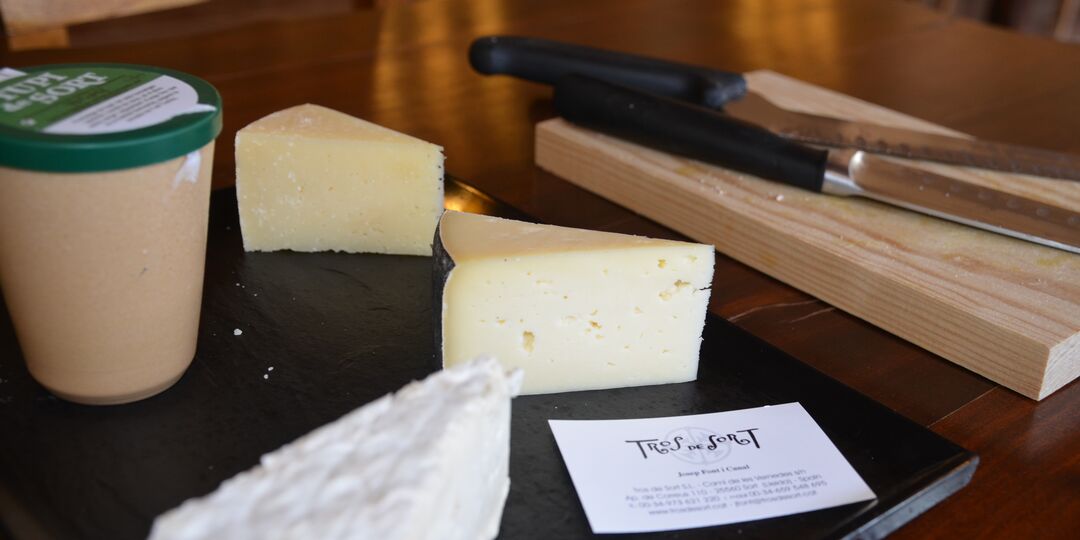
One of the greatest gifts in the Catalan pantry is its cheeses. For me, cheese and Catalonia are simply inseparable, and I don’t think I have ever returned home from Catalonia without having three or four large cheeses in my suitcase – and if the “price” is having to hand-wash a sweater or two that may have picked up a slight cheese aroma, I’m more than happy to pay it.
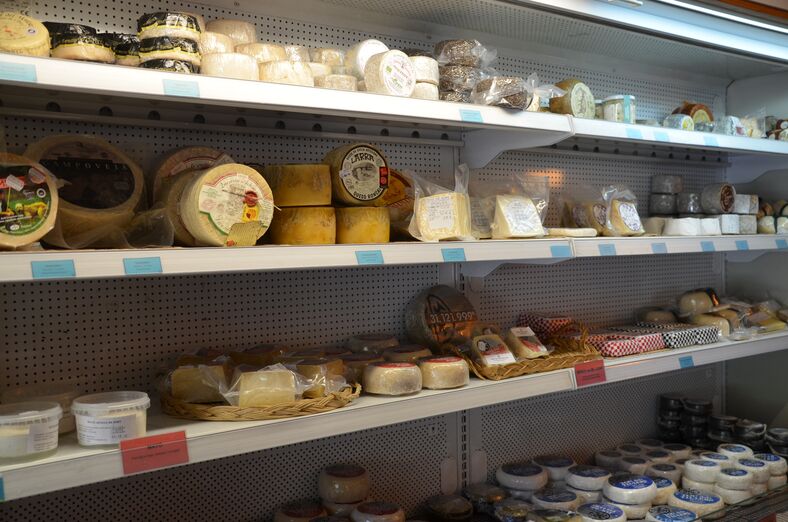
When you visit a Catalan home, cheese always makes it onto the table. It may be served as delicious tapas, a starter or a dessert – and there is usually more than one variety. As the finishing touch, it is very likely to come from a local cheese producer. Wonderful local cheeses are produced all over Catalonia, and of course people are loyal to their local cheesemaker. Everywhere, cheeses are made from sheep’s, goat’s and cow’s milk, ensuring an enormous variety of outstanding cheeses. Which type of cheese is produced in a given area simply depends on which animals graze in the surrounding fields.
When staying in a holiday home in authentic surroundings in Catalonia, you should really make the most of it. I therefore suggest asking your host where the nearest or best local small-scale producer is – and then go and buy your cheese directly from the cheesemaker. It is usually very cosy, the price is highly attractive, and the children may even get the chance to pet the little goats.
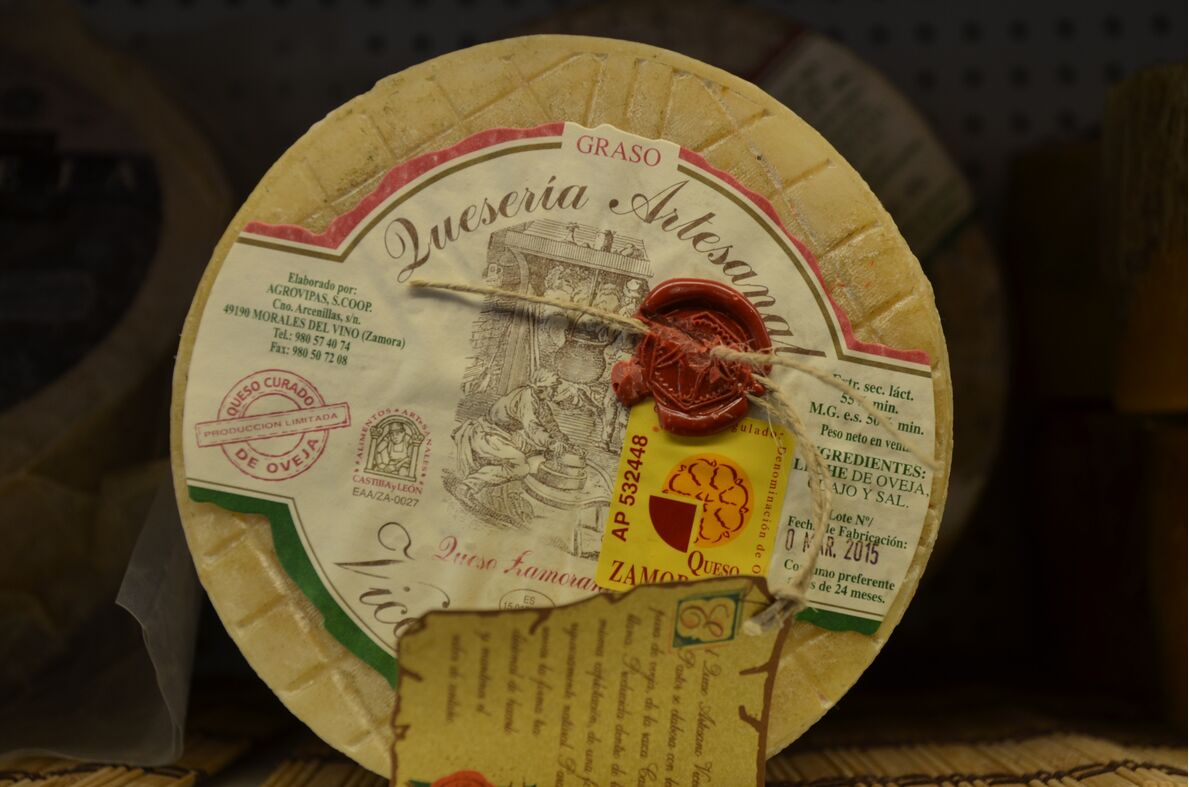
In the past, you had to travel out to small villages where a specific cheese was produced, but today you can also taste many of these delights at the small local markets. It is practically a law of nature that there is a cheese stall – and here you will most certainly have the opportunity to sample the goodies. Buy enough to enjoy with a good glass of red wine on the terrace of your Catalan holiday home… and don’t forget a little something for your suitcase too!
If you would like to bring some of the local delicacies home with you, most cheese sellers also offer to vacuum-pack the cheeses. This spares your suitcase from an intense cheese aroma – something that is definitely recommended. Enjoy!
Below I list a few cheeses to keep an eye out for when you go cheese shopping. First, the classic Catalan cheeses – followed by a couple of other Spanish favourites that are also often found on the table in Catalonia.
Mató
The oldest documented Catalan cheese is mató, a soft, spreadable, ricotta-like cheese. Mató is very easy to make and is usually made from cow’s milk, though occasionally from goat’s milk. In the Middle Ages it was served with honey in the dessert known as “mel i mató”. Today, mató is a very common dessert in Catalan cuisine and is sold in all cheese shops and traditional restaurants throughout Catalonia. You can also find it on the dessert menu of most local restaurants.
Garrotxa
Garrotxa is one of the cheeses you often come across at markets in Catalonia. It is typically made from goat’s milk and is known for its fine, mild and creamy flavour. It works wonderfully as tapas – and is one of those cheeses where you easily end up “tasting a little too much” while standing at the stall.
Serrat
Serrat is an intensely flavourful, rounded and compact cheese. Its name comes from the word “cerrado”, meaning closed. Serrat is a sheep’s milk cheese with an exterior that is traditionally decorated with various patterns and shapes. Like Manchego, it is aged and similar in flavour and texture, but smaller. It has been produced since the 10th century and was originally made mainly by farmers and shepherds in the Pyrenees for their own consumption and for trade. If you want to get hold of a truly classic example and are up for a small excursion, we recommend visiting the village of Corroncui in the Pyrenees. Here, two producers – Ca de Tunica and Mas d’Eroles – make excellent versions using sheep’s milk from local Txiqueta and Ripollesa breeds.
(Tip: if you want to keep it really simple, ask the cheese seller for “local sheep’s cheese from the Pyrenees” – you’ll often hit the mark.)
Manchego
Outside Spain, Manchego is probably the most famous Spanish cheese. A true Manchego may only be made from sheep’s milk from the Manchega sheep (and must come from La Mancha). Today, variations made from a combination of sheep’s and cow’s milk are also produced, and these can be an excellent alternative if you prefer a milder Manchego. You also need to decide whether you want it fully cured (sec) or semi-cured (semi-sec). The cheese is aged for up to 12 months, giving it a firm, dry texture and a full, lightly salted flavour. It is perfect as tapas with good ham, olives and salted almonds. You can hardly go wrong here, and even more delicate palates usually give in. It is also a cheese I definitely recommend keeping in the fridge in your holiday home – everything simply tastes a bit more authentic.
Idiazabal
Another sheep’s milk cheese is Idiazabal, which has a smoky, rich flavour and a slightly perfumed aroma. It pairs beautifully with grilled food or a glass of robust red wine and can be recognised by its orange rind. (It comes from the Basque Country/Navarra – so not Catalan, but truly excellent.)
Murcia al vino
Murcia al vino means “the drunken goat” and is indeed made from goat’s milk. The cheese is aged for 45 days and is bathed in wine twice during the process, giving it a beautiful reddish colour and a wonderful floral flavour. Taste it – it’s a brilliant cheese! (As the name suggests, it comes from Murcia.)
Cabrales
Cabrales is one of the world’s strongest blue cheeses – a real man’s cheese – so you need a bit of courage to take it on. I recommend trying it by the swimming pool and jumping in if it’s too intense. It originates from the Picos de Europa in northern Spain and is made from a blend of cow’s, goat’s and sheep’s milk. It is aged for three to six months in limestone caves, where it absorbs humidity and cool mountain air. It is sublime in desserts, served with a little honey and toasted walnuts or fresh fruit.
From here, I wish you bon appétit and happy cheese hunting on your holiday. Visiting the small local markets is simply an extra charming activity when you are staying in a holiday home. You are also more than welcome to send me an email at info@sydensferiehuse.dk if you come across a particularly good one – or if you have a local cheese tip that I absolutely must try next time.
Lyngby Torv 5
DK-2800 Kongens Lyngby
Denmark



Bertel Dahlmand Stahn
Owner & Contact person