Blog post by Bertel Dahlmand Stahn
Self-drive holiday to Catalonia: Our guide after 20 years of experience
Bertel Dahlmand Stahn / May 21, 2026
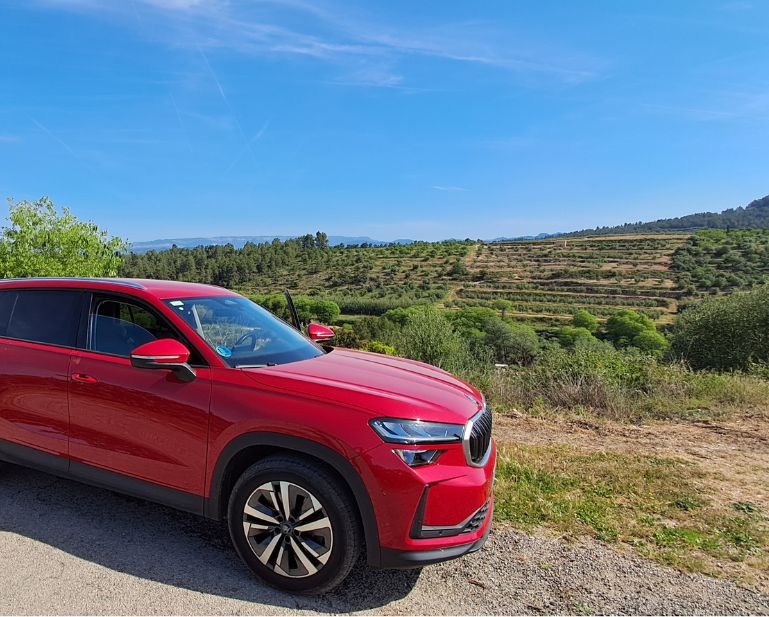
From England to Catalonia, you are looking at roughly 1,400–1,600 km depending on where in England you set off from – plus the Channel crossing, of course. With over 20 years of experience renting holiday homes in Catalonia, Lisbeth and I have welcomed many English guests who have made this journey, and we have done stretches of it ourselves. It is a wonderful alternative to flying and renting a car – and for many people, the holiday truly begins the moment the car leaves the driveway.
This is the guide we wish our English guests had always had.
There are actually many advantages to travelling by car:
Before the drive proper begins, there is of course the small matter of the English Channel. You have two main options:
Eurotunnel (Le Shuttle) – Folkestone to Coquelles (near Calais). The crossing takes only 35 minutes and runs frequently throughout the day and night. It is the fastest option and particularly convenient if you are coming from London or the South East. Book in advance during peak season, as it fills up quickly.
Ferry – Several routes are available:
Once you are across the Channel, you have choices. In practice, we would describe two main approaches:
From Calais or Dunkirk, the most direct route heads south through France on the A26 and A6 – the so-called Autoroute du Soleil – via Reims, Dijon and Lyon, then continuing south on the A7 and A9 through the Rhône Valley towards Montpellier and Perpignan. From Perpignan, you cross the border into Catalonia at La Jonquera and join the AP-7 south along the coast.
From Calais to the Costa Brava, this is roughly 1,300 km of driving. With two drivers and a couple of sensible stops, it can be done in a long day – but we would honestly recommend against it. Two overnight stops make for a much more enjoyable journey.
A practical tip we have picked up over the years: rather than booking hotels far in advance for every night, it is now very easy to find good accommodation at short notice using apps. That means you can stop when the traffic and your energy levels suggest it is the right moment. We have often enjoyed driving into the evening when the motorways are quieter, then sleeping a little longer and continuing once the morning rush hour has passed.
Here you turn the drive into a holiday in itself. We have done this in various forms, and some of our favourite travel memories have come from these detours. A few ideas:
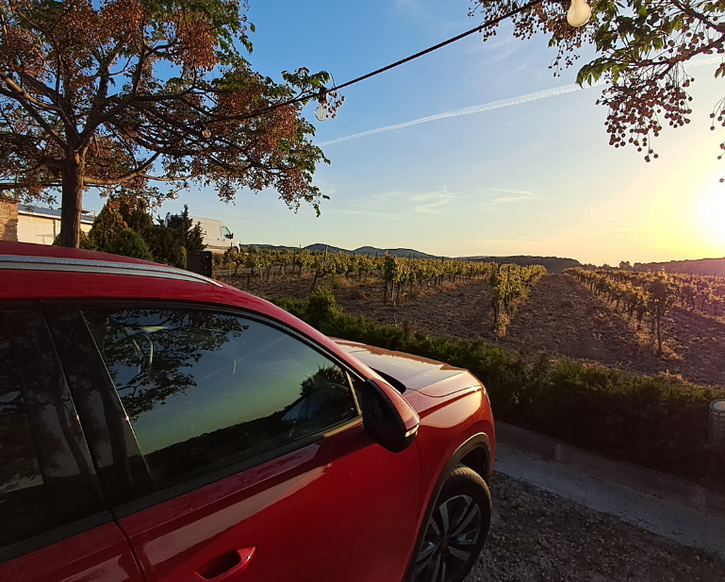
Here is a realistic estimate for the fastest route in a standard petrol car – say a 3–5 year old family car averaging around 13–14 km per litre at motorway speeds with a full load.
One way, from southern England to the Costa Brava area (approx. 1,500 km of driving plus the Channel):
For a family of four, this is often comparable to – or cheaper than – flights plus car hire in high season, especially once luggage fees are factored in.
Disclaimer: These are rough estimates based on 2026 figures and will vary significantly depending on your car, driving style, booking timing, and fuel prices, which are currently subject to some volatility. Always check current prices before planning.
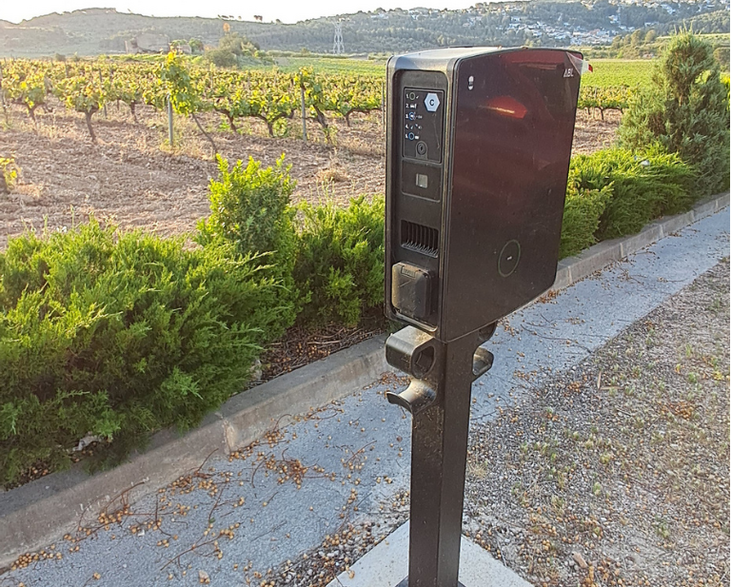
We are often asked about making the journey in an electric car, and the short answer is that it has become considerably more straightforward in recent years. The charging network across France and Spain has expanded significantly, with fast chargers at regular intervals along all the major motorway corridors.
In Catalonia itself, the transition has not moved quite as quickly as in the UK, but that also means there tends to be less competition for charging stations. We currently have two of our houses equipped with their own charging point, and for the others we are very happy to help you find the nearest charging options. Do get in touch if you are considering the drive in an electric car – we will find the solution that works best for you.
If you have any questions about charging an electric car in Catalonia, or if you are considering making the trip by electric car, please feel free to contact us at info@sydensferiehuse.dk. Together, we will find the solution that suits you best.
If you plan to drive through major French cities such as Paris or Lyon, your car will need a Crit'Air environmental sticker displayed on the windscreen. It costs under €5 and is ordered online, but it is sent by post – so order it in good time before you travel.
The speed limit is 120 km/h on motorways and 90 km/h on main roads. You are legally required to carry a reflective vest and two warning triangles (or the newer V16 emergency signal, which is gradually replacing the triangles). One quirk: in Spain you can be fined for driving in flip-flops, so keep a pair of proper shoes handy for behind the wheel.
Barcelona has a low-emission zone, and foreign-registered cars must in many cases be pre-registered digitally before entering. Registration is free but must be done in advance – otherwise you risk a fine. This only applies to Barcelona city itself, so if you are staying on the coast or in the interior, it only becomes relevant if you make a day trip into the city.
A small but worthwhile detail: if you are driving a UK-registered right-hand drive car on the Continent, it is worth fitting beam deflectors to your headlights so you do not dazzle oncoming drivers. These are inexpensive and widely available.
Tyre pressure, oil, lights and windscreen wipers. A long motorway journey is not the moment to discover you have slightly too little tread on the tyres.
As an alternative to driving, the train actually works surprisingly well. I have taken it home from Catalonia a couple of times myself, and with good connections through France the journey can be done in a day and a half to two days. Eurostar from London to Paris is the natural starting point, and from Paris there are direct TGV services to Girona and Barcelona. At Girona station you can hire a car directly.
It is a relaxed way to travel, but it does require a little planning around tickets and connections. I am always happy to share tips with anyone considering the train.
A road trip to Catalonia does not have to be just transport – it can be an active and memorable part of the holiday itself. And when you finally roll into the driveway of the holiday house after a couple of days on the road, that first dinner on the terrace tastes all the better for it.
Most of our holiday houses have plenty of secure parking, and as mentioned, two of our houses have their own charging point. If you are considering a driving holiday and have any questions – about the route, electric car options, or which house best suits a family travelling by car – do get in touch. We have made the journey many times ourselves, and we are very happy to help make your road trip to Catalonia a great one.
Does a holiday in Catalonia sound tempting? You are welcome to visit our website or fill out our suggestion form.
Lyngby Torv 5
DK-2800 Kongens Lyngby
Denmark



Bertel Dahlmand Stahn
Owner & Contact person